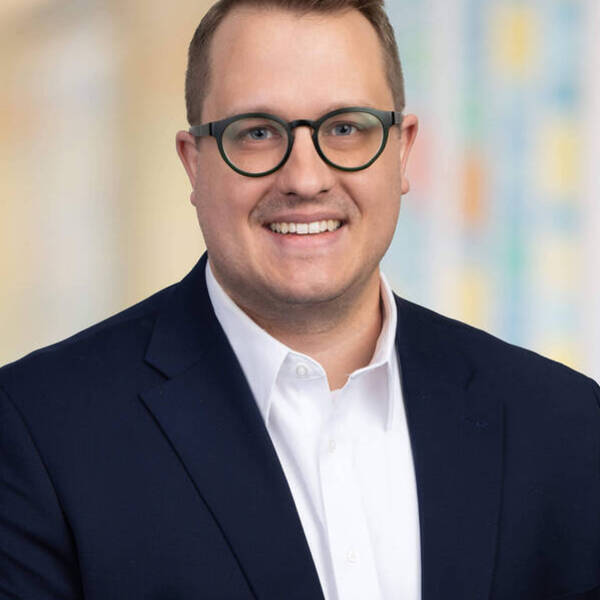
Christopher Ostertag, Ph.D., HEC-C
Director of Ethics for the Institute for Rare Diseases, Bill & Lisa Powers Collegiate Associate Professor of the Practice
- Office
- 311 Jordan Hall of Science
- costert2@nd.edu
Chris Ostertag serves as the Bill & Lisa Powers Collegiate Associate Professor of the Practice in Preprofessional Studies and the Director of Ethics for the Institute for Rare Diseases at the University of Notre Dame. Prior to Notre Dame, Chris worked as a clinical ethicist and mission leader for seven years across three health systems.
Chris completed a PhD in theology and health care ethics at Saint Louis University, where he wrote a dissertation on "Prenatal Diagnosis, Parenthood, and Disability: A Catholic Call to Witness." Chris also completed an MA in philosophy at Texas A&M University and a BA in English and Philosophy at Rockhurst University. Chris has published on a variety of topics in bioethics including prenatal genetic counseling, determination of death and organ donation, disability, data ethics in Catholic health care, and ethics expertise in clinical ethics. Chris is a certified Healthcare Ethics Consultant through the American Society for Bioethics and Humanities.
In addition to his professional experience and education, Chris brings lived experience to his work within the Institute for Rare Diseases. Chris is a bereaved parent of a child who had a rare disease. Chris's son, Hans, had a peroxisomal disorder called Zellweger spectrum disorder. Chris has served on the board of directors for The Global Foundation for Peroxisomal Disorders since 2020 and has been involved in rare disease advocacy since 2017.
At Notre Dame, Chris's research explores ethical issues within the realm of rare disease and how the Catholic social tradition provides an important call for the care and accompaniment of persons and communities impacted by rare disease. Chris is interested in the concept of responsible parenthood in Catholic moral theology, contemporary debates on determination of death and practices surrounding organ donation, organizational ethics issues and Catholic identity in health care, and shared decision-making in pediatrics.